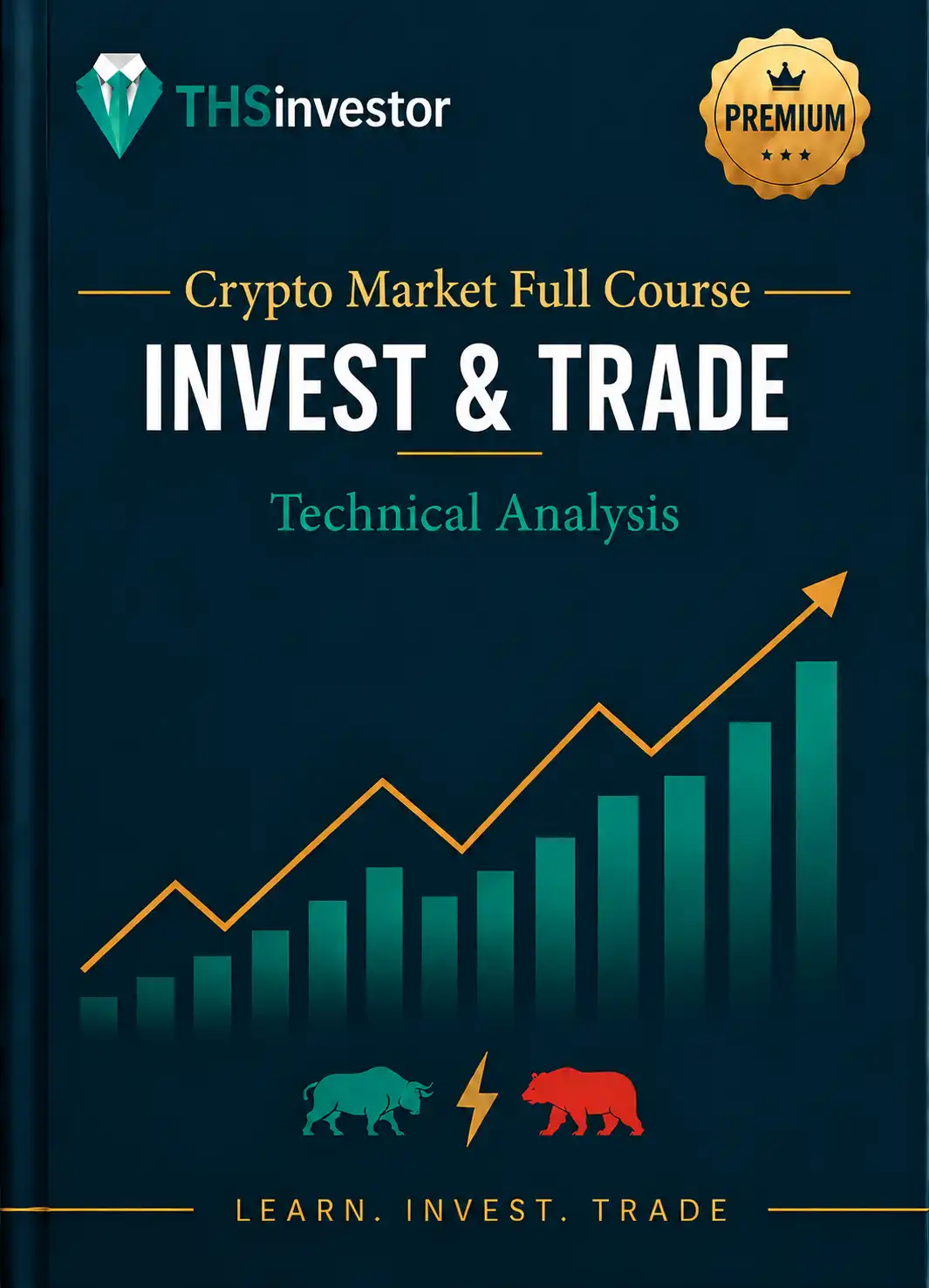
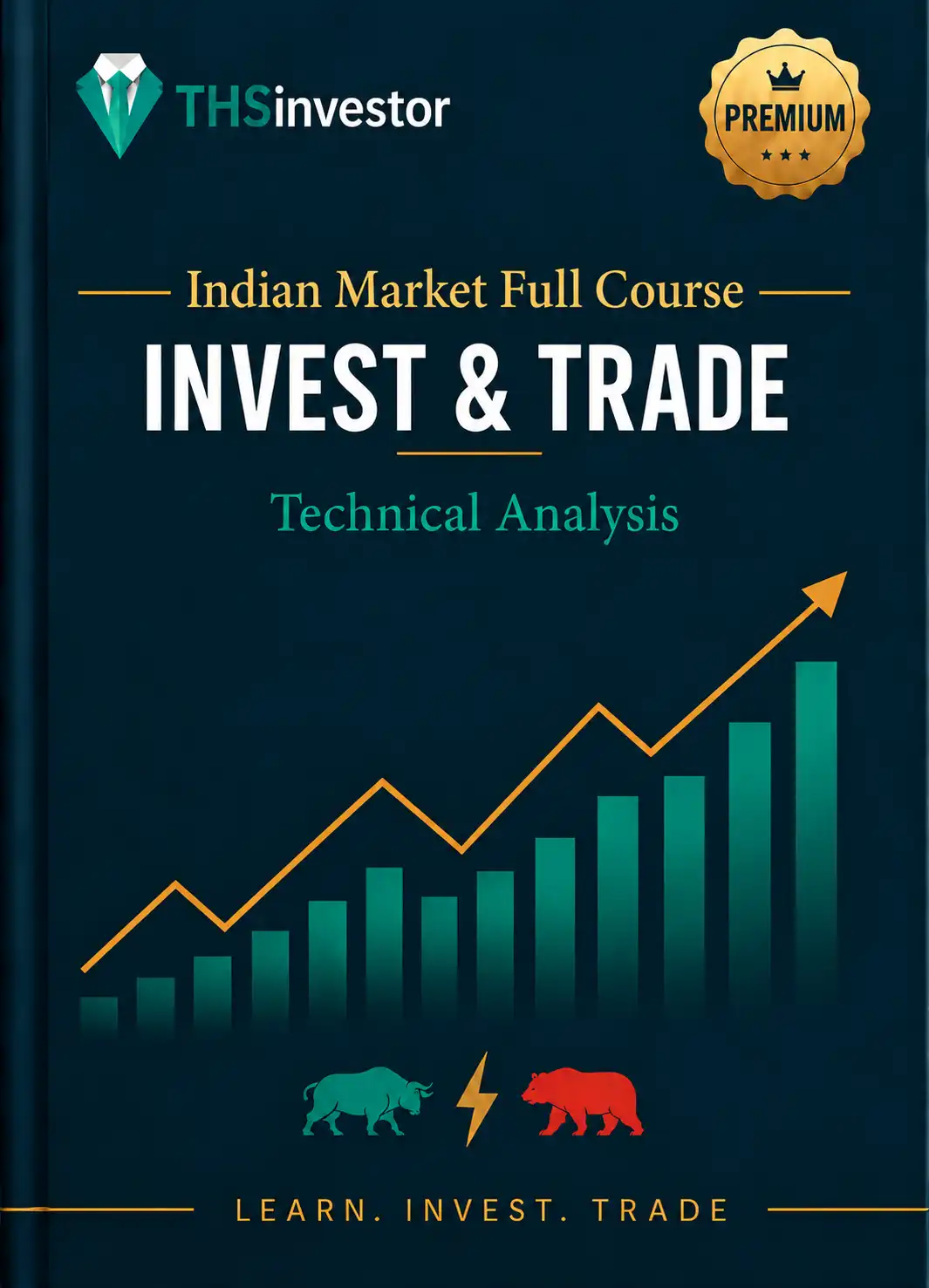
Technical Analysis Crypto Markets Indian Markets
THSinvestor Plus
Live

Everything you need to Trade and Invest like a Pro.

One Stop.

Technical Analysis Secrets, Explained In-Depth.

Go beyond basic indicators and understand how price actually moves.

Trusted & Secure

THSInvestor Investing & Trading Modules INVESTING MODULE LEARN · ANALYZE · INVEST TRADING MODULE Learn. Plan. Trade.
Available in Crypto & Indian Editions

Technical Analysis: Choose Your Edition

Same core lessons, with studies and examples from the market you trade.

Crypto Markets Edition

Investing Module

Learn. Analyze. Invest.

Learn how to build a long-term portfolio using chart analysis on larger timeframes, market relations, historical data, institutional activity. Know when to enter, when to exit and when to stay patient.

Who it is for

Investors who want to build wealth through research and patience.

Investing Module — Crypto Markets Edition cover
$35 $50 one-time
Buy Investing Module
Crypto Markets Edition

Trading Module

Learn. Plan. Trade.

Learn trading built around secrets of Option Selling. Use advanced price action to find trends and pullbacks, read big-player direction, and identify high-probability trades.

Who it is for

Traders who want to trade professionally with Risk Management.

Trading Module — Crypto Markets Edition cover
$35 $50 one-time
Buy Trading Module

Important: Read This Before Buying

Crypto and Indian editions have the same chapters/content. Only the examples and market application differ. Buy either the Crypto or Indian edition according to the market you trade in.

Investing and Trading modules cover different skills, so you can buy one or own both based on what you want to learn.

Also, we strongly recommend completing all our free lessons (thsinvestor.com/tech-analysis) before starting the paid course.

Why THSinvestor?

Do You Actually Need These Modules?

This is for you if you struggle with these problems:

1

Knowing When to Buy or Sell

You find a stock you like. But when should you buy it? When should you sell it? Without a clear method, you keep guessing and often enter too early or exit too late.

2

Finding Market Tops and Bottoms

The market keeps going up, but you don't know when the top is near. Then it starts falling, and you don't know if it's a small correction or a bigger fall. You only know after the move has happened.

3

Understanding What Moves the Market

Your market starts moving, but you don't know why. US markets, bond yields, and the dollar are moving too, but you don't know how they affect your investments.

4

Understanding How Professionals Trade

You keep buying options, but many expire worthless. You see professionals selling options, but don't know why they do it or how they improve their chances of winning.

5

Making Sense of Price Action

You look at a chart and see random candles moving up and down. You can't tell what they mean or where price is likely to move next.

6

Keeping Your Analysis Simple

You use ten indicators, but still lose trades. Your chart is full of signals, but you can't see the price clearly or find key support and resistance levels.

Here’s Why THSinvestor

What You’ll Actually Learn

The Market Secrets You’ll Learn:

Exclusive Insights from THSinvestor

How US markets influence other markets around the world. You will understand when global market moves can support the market you trade.

How inflation, interest rates, and bond yields shape market conditions. You will understand what these forces mean for your market.

What big players are buying and selling and why. You will learn to read their activity and use it to understand where the market may be heading.

How to find quality assets using methods like: channels, moving averages, and price action. You will know exactly where and when to buy and exit.

How to build a long-term portfolio that compounds over decades. You will know how to size each position, when to add, and when to exit.

How to use a top-down approach before buying. You will analyze the index or Bitcoin first, then find the right stocks or coins to invest.

How to hold your winning bets and cut your losing ones. You will learn when to give a good picks room to run and when to accept that your idea is wrong.

Why meditation is more important than indicators. You will learn to control emotions and how to make better decisions when the market gets difficult.

Transformation

How Your Thinking Will Change

From luck to skill, from guessing to confidence

BeforeYou use ten indicators and still cannot read the market.
AfterYou focus on price and candles. You learn to read what the market is actually telling you.
BeforePrice has gone up too much, so you sell.
AfterPrice is still rising and big players are buying. You wait for a pullback instead of selling too early.
BeforeYou focus on how much profit you can make.
AfterYou focus first on how much you can lose. You respect your stop-loss and protect your capital.
BeforeYou hold losing trades and sell winners quickly.
AfterYou cut losing trades quickly and give winning trades room to run.
BeforeEveryone is buying, so you buy too. Everyone is talking about it, so you expect more upside.
AfterYou watch when everyone starts talking about the same trade. Extreme attention can signal that a top is getting close.
BeforeYou keep adding to a losing trade to bring your average price down.
AfterYou add to trades that are moving in your favor. You increase exposure only when the market proves you right.
BeforeYou refuse to accept that your analysis was wrong. The loss keeps getting bigger.
AfterYou accept when your analysis is wrong. You exit quickly and change your view when the market proves you wrong.
BeforeThe market falls and you search social media for an explanation.
AfterThe market falls and you check US markets, bonds, interest rates, and the dollar to understand what is driving the move.
BeforeYou buy options because the profit looks attractive.
AfterYou understand why big players sell options. You use time decay and probability to structure trades with an edge.
BeforeYou feel happy when you win and upset when you lose.
AfterYou stay emotionally neutral. A win does not make you overconfident, and a loss does not change your state of mind.
Table of Contents

What’s Inside: Complete Course Breakdown

Note: The Table of Contents remains the same for both Crypto and Indian editions.

Investing Module

EXCLUSIVE

Chapter 1: Long-Term Investing

Part 1: Market and Sector First, Asset Second
  • Why market direction matters most
  • Comparing index with individual asset
  • Two signals: trend vs rotation
  • Market regimes: risk-off, leader, rotation
  • Analyzing larger trend
  • Finding overbought zones
Part 2: Asset Selection
  • Checking sector/category strength
  • Using EMAs correctly
  • Buying zones
  • Channels for selection
  • Moving averages support
  • Price action structure
  • Spotting institutional and smart-money accumulation
  • Clues: support, contraction, shakeouts
  • Relative strength and effort-vs-result volume
  • Exhaustion volume as reversal clue
  • Confirming breakouts and healthy pullbacks
  • Buying strength, not weakness
Part 3: Chart Patterns - Entry Triggers
  • What chart patterns actually mean
  • Continuation patterns
  • Neutral patterns
  • Double and triple tops
  • Head and shoulders
  • Cup and handle
Part 4: Building the Long-Term Portfolio
  • Ideal portfolio size and diversification
  • Maintaining a core anchor allocation
  • Adjusting allocation across market conditions
  • Diversifying sectors and position sizing
  • Scaling in slowly
  • Exit signals
  • Bearish reversal patterns as exits
  • Rotation reversal as early exit
  • Emotional exits
Part 5: The Complete Pre-Investment Checklist
  • Step-by-step pre-investment checklist
  • Market and sector confirmation steps
  • Asset selection verification steps
  • Entry and position-sizing steps
  • Portfolio exposure and risk checks

Chapter 2: INTERMARKET RELATIONS

Part 1: US Interest Rates and Bond Yields
  • Understanding interest rates and borrowing costs
  • What bonds are and how issued
  • The 10-Year Treasury as benchmark
  • Bond prices and yields move inversely
  • Why bond yields matter for investors
  • How rates influence global capital flows
Part 2: Dollar Strength
  • The DXY: measuring dollar strength
  • What drives the dollar index
  • Why currency weakness can hurt markets
  • Why dollar strength can hurt markets
Part 3: Institutional Flows
  • What institutional investors are
  • Why foreign flows matter to markets
  • Why investors buy or sell
  • Historical case studies of flow impact
Part 4: US Index
  • What the benchmark index represents
  • Why investors should care
  • The index as a risk-appetite gauge
  • How the index markets
Part 5: Gold
  • Why investors buy gold historically
  • Gold as a fear indicator
  • Relationship between gold and markets
Part 6: Putting Everything Together
  • Money moves first, prices follow
  • The full macro hierarchy explained
  • Reading investor psychology through indicators
  • Why no single indicator stands alone

Chapter 3: PSYCHOLOGY

Part 1: Learn to Take the Stop-Loss
  • Losses as business expense, not failure
  • Emotion taking over near stop-loss
  • Rationalizing and seeking evidence to stay
  • Loss growing from small to severe
  • Getting rewarded for bad behavior sometimes
  • Math of recovering from large losses
  • Position sizing to reduce emotional pain
  • Judging success by process, not outcome
Part 2: Revenge After a Loss
  • Normal losses versus self-inflicted spiraling losses
  • Urgency to recover money immediately
  • Standards collapsing after a loss
  • Breaking one rule enabling the next
  • Probability having no memory of past trades
  • Stepping away to protect mental state
  • Testing if next trade stands alone
  • Revenge trading as an ego problem
Part 3: Holding Losers, Exiting Winners
  • Losses small and frequent, profits larger
  • Nervousness when a trade turns profitable
  • Patience with losses, impatience with gains
  • Loss aversion outweighing pleasure of gains
  • Asymmetry between average winners and losers
  • Predefined exit plan before entering trade
  • Systematic exits versus fear-driven exits
  • Discipline determining execution, not knowledge
Part 4: Following Crowd and Addiction to Action
  • FOMO from vertical charts and hype
  • Smart money exiting into late crowd demand
  • Urge to trade when nothing is happening
  • Lowering standards out of boredom
  • Market paying for accuracy, not activity
  • Addiction to stimulation and constant action
  • Waiting patiently for high-probability setups
Part 5: Master Your Mind
  • Executing the plan despite strong emotions
  • Becoming emotionally detached from outcomes
  • Remaining calm through market uncertainty
  • Self-mastery as the real trading edge

Trading Module

EXCLUSIVE

Chapter 1: OPTIONS TRADING

Part 1: Moneyness and Time Value
  • ITM, ATM, and OTM states explained
  • Option premium as intrinsic plus time value
  • Calculating intrinsic value for calls and puts
  • ATM options carrying highest time value
  • Time value reaching zero at expiry
Part 2: Time Decay (Theta)
  • Theta as gradual erosion of option value
  • Option value melting like ice analogy
  • Non-linear decay accelerating near expiry
  • 20% decay early, 80% decay late
  • Theta favoring sellers, hurting buyers
Part 3: Expiry and Settlement
  • Weekly expiry versus monthly expiry
  • Faster decay and cheaper premiums weekly
  • Slower decay, more forgiving monthly options
Part 4: Payoff Graphs
  • Long call payoff and breakeven point
  • Losing money even when direction is right
  • Short call payoff and capped profit
  • Unlimited risk when selling naked options
  • Long put payoff, ITM versus OTM
  • Short put payoff and premium collection
  • Today P&L line versus expiry P&L line
Part 5: Option Spreads
  • Credit call spread structure and hedge
  • Credit put spread structure and hedge
  • Hedge capping maximum possible loss
  • Calculating net premium and max loss
  • Spreads solving unlimited risk of naked selling
  • Choosing spreads over the market or direct buying
Part 6: The Timeframe Framework
  • Hourly and Daily charts
  • Swing trades
  • Selecting strike price
  • Balancing theta decay with risk-reward
Part 7: Identifying the Trend
  • Aligning hourly trend
  • Waiting for pullback
  • Grading pullback quality
  • Healthy pullback characteristics
  • Placing stop loss
  • Which enteris to avoid
Part 8: Increasing Probability of Trade
  • Liquidity grabs
  • Relative strength
  • Stacking multiple confirming
  • Scaling into position size gradually
  • Booking profit
  • Maintaining risk-reward
  • Exiting failed setups quickly
  • Trailing stop
Part 9: The Pre-Trade Checklist
  • Confirming trend
  • Verifying pullback
  • Confirming stop-loss and risk-reward criteria
  • Requiring additional confluence before entry

Chapter 2: PRICE ACTION

Part 1: The Anatomy of a Single Bar
  • What Body size of a candle means
  • Importance of wicks
  • Close location within candle range
  • Same candle different context
  • Four checks to properly read a candle
Part 2: Market Structure, Trends and Pullbacks
  • Swing speed and price
  • Momentum slowing
  • Candle strength in a trend
  • Trends ending
  • Trendline break
  • Pullback quality
Part 3: Volume, Effort Versus Result
  • Volume as effort, candle as result
  • High effort, strong price
  • Low effort, weak result
  • Low effort, strong result
  • High effort, weak result
Part 4: Institutional Footprints
  • Position building by large players
  • Order blocks, displacement, and fair value gaps
  • Gap filling
  • Entering a position
  • Strong, valid order block
  • Failed order block
  • Liquidity sweep
Part 5: Reading Between the Candles
  • Reading within the higher trend
  • Trend bars
  • Reversal bars
  • Real breakouts vs fake
  • Repeated rejections
  • Moving average as a battleground

Chapter 3: PSYCHOLOGY

Part 1: Learn to Take the Stop-Loss
  • Losses as business expense, not failure
  • Emotion taking over near stop-loss
  • Rationalizing and seeking evidence to stay
  • Loss growing from small to severe
  • Getting rewarded for bad behavior sometimes
  • Math of recovering from large losses
  • Position sizing to reduce emotional pain
  • Judging success by process, not outcome
Part 2: Revenge After a Loss
  • Normal losses versus self-inflicted spiraling losses
  • Urgency to recover money immediately
  • Standards collapsing after a loss
  • Breaking one rule enabling the next
  • Probability having no memory of past trades
  • Stepping away to protect mental state
  • Testing if next trade stands alone
  • Revenge trading as an ego problem
Part 3: Holding Losers, Exiting Winners
  • Losses small and frequent, profits larger
  • Nervousness when a trade turns profitable
  • Patience with losses, impatience with gains
  • Loss aversion outweighing pleasure of gains
  • Asymmetry between average winners and losers
  • Predefined exit plan before entering trade
  • Systematic exits versus fear-driven exits
  • Discipline determining execution, not knowledge
Part 4: Following Crowd and Addiction to Action
  • FOMO from vertical charts and hype
  • Smart money exiting into late crowd demand
  • Urge to trade when nothing is happening
  • Lowering standards out of boredom
  • Market paying for accuracy, not activity
  • Addiction to stimulation and constant action
  • Waiting patiently for high-probability setups
Part 5: Master Your Mind
  • Executing the plan despite strong emotions
  • Becoming emotionally detached from outcomes
  • Remaining calm through market uncertainty
  • Self-mastery as the real trading edge
Feedback

What Buyers Are Saying

Your feedback helps us build better content.

Nishat

Investing + Trading

Option selling for life now

New things with quality. Had to use google but full marks for quality per rupees

Rohan

Investing + Trading

Understood importance of trend and psychology

US market, bonds, inflation make sense now. New dimensions unlocked with options and price action

Liam

Trading

Advanced concepts

These are super difficult chapters but quality is unmatchable. Need multiple reads

Mei

Investing + Trading

Option is new

Cant believe how we have been robbed off theta decay. Difficult read but once you understand, there is no going back

Angus

Investing + Trading

Worth every penny

Got both. More than i expected. Need to read it 2-3 times to fully understand

Elio

Trading

High level stuff

Help us improve. Share your feedback at [email protected]

Honest Expectations

Who This Isn’t For

These Modules are NOT for you if any of the following is true.

You want guaranteed profits.

No course can guarantee profit. You will win some trades and lose some trades. The goal is to make high probability choices and control your risk.

You think technical analysis can predict the future.

Technical analysis helps you read price charts, spot possible trade setups and manage risk. It cannot tell you what will happen next.

You want fast and easy money.

There is no fast or easy money. You must learn, practice, make mistakes and give yourself time to find what works for you.

You cannot afford to lose your money.

Never trade with money you cannot afford to lose. If losing this money would hurt your daily life, do not trade it.

You believe someone can predict the market with full certainty.

Nobody knows for sure what the market will do next. If you want someone to tell you the exact moment to buy or sell, this course is not for you.

You expect to read the course once and know everything.

The modules may feel like a lot at first, and that is normal. Read again whenever you need to. Real progress comes from practice, making mistakes and learning from them over time.

FAQs

Frequently Asked Questions

Still have questions? Start here.

Can I get a refund after purchasing the books?
No. Due to the digital nature of the product, all purchases are final. The books are delivered as PDF files, and once the files are provided, we cannot accept returns or process refunds. Please review the product details and FAQs carefully before purchasing.
Is this a financial advice?
No. The books are for educational purposes only. They do not provide personal financial, investment, or trading advice. You are responsible for your own investment decisions and should do your own research before taking any position.
Which version should I buy: Indian Markets or Crypto?
Buy the edition matching the market you actually trade or invest in. The Modules are identical, only the examples differ. Do not buy both.
Can I buy just Investing without Trading, or just Trading without Investing?
Absolutely. They are completely separate systems designed for different timeframes and goals. Investing teaches long-term portfolio management over months and years. Trading teaches active swing positions over days and weeks.
Is this beginner friendly?
Yes, it is beginner-friendly. However, we highly recommend reading our free Technical Analysis content first to understand the advanced topics covered in the modules at thsinvestor.com/tech-analysis.
Do I get lifetime access?
Yes. Once you purchase, the content,pdf, is yours. There is no subscription. You own the books permanently and can access them anytime. If updates are made, you receive them at no additional cost.
Are these strategies risky?
Yes. Investing and trading involve risk of loss. The modules teach you to manage that risk through position sizing, stops, and probability. But risk exists and you must accept it. This is not a guarantee of profits.
Can I share this with a friend?
No. Your purchase is for personal use only. Sharing, copying, forwarding, or distributing the books or their content is not permitted.
Will this work in different market conditions?
Yes. Technical analysis is based on price, volume, trends, and market behaviour. These principles can be applied across different markets, including stocks, indices, and crypto.
The Final Word

You’ll Trade Again Tomorrow. Be Ready.

Every day you delay is another day of guessing, chasing, and missing.

Remember, the price of learning is fixed. The cost of trading without knowledge is not.

Get Started Now

Learn before the market teaches you the hard way.

Explore Our Free Lessons

Learn the Technical Analysis Essentials with our free guide.

Digital Purchase. Final Sale.

Books are delivered as PDF files and cannot be returned or refunded. Please review the contents and choose your edition carefully before purchasing.

Immediate access

Download the books instantly to your device.

Lifetime ownership

No subscription. No recurring fees. You own these books forever.

Free updates

If content is updated, you receive the updates at no cost.

Learn Beyond Indicators

Investing, Trading, Options, Price Action, Macro, Psychology.

Get Your Free Sample

Enter your email and click the confirmation link we send you to get the PDF.

Get our latest market updates for free!